One of the early spring rituals in our yard involves mounting expeditions to the north side of the house, with its moist soil and partial shade, and scanning the ground near the heat-pump. In Nadia’s imaginative parlance, we are looking for “soldiers”, but most folks might just say we’re looking for the extended, but unopened flowers of a true spring beauty, the gorgeous Bloodroot.
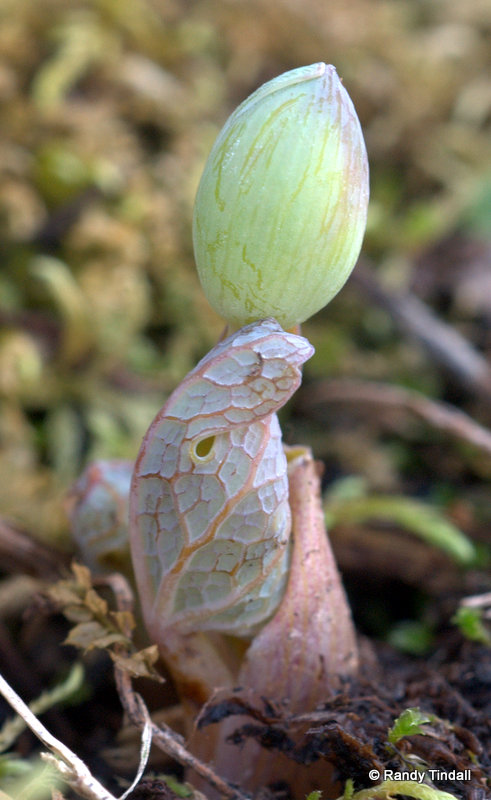
Bloodroot (Sanguinaria canadensis) “soldier”
Sanguinaria canadensis is ethereally beautiful, but doles out its loveliness only briefly. That’s why we look for it early and keep checking until we find it—-the flowers come and go in a rush in just two to five days. Snooze and lose—- another year to wait. After the single slim-necked flower shows its “helmeted” head, protruding above the cloak or shield provided by the plant’s solitary embracing basal leaf, it will not be long before it opens up into a many-petaled white blossom with yellow stamens, a couple inches in diameter.
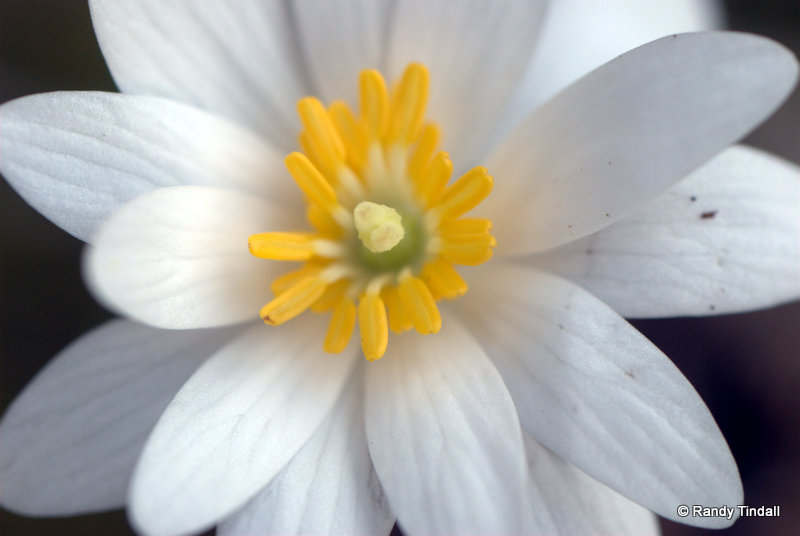
Bloodroot Flower
The leaf spreads out into an attractive deeply-lobed structure which continues growing after the flower has gone and can become many inches in diameter before the plant goes dormant in mid- to late-summer.
Best planted from seed, it prefers partial to full shade and moist, well-drained soils, hence its love of the north side of our house. After establishment, it will propagate itself by rhizomes and seed and can eventually form large dense patches. It finally seems to have taken off in our yard, since Nadia counted twenty-some blossoms this year—a substantial increase from previous years.
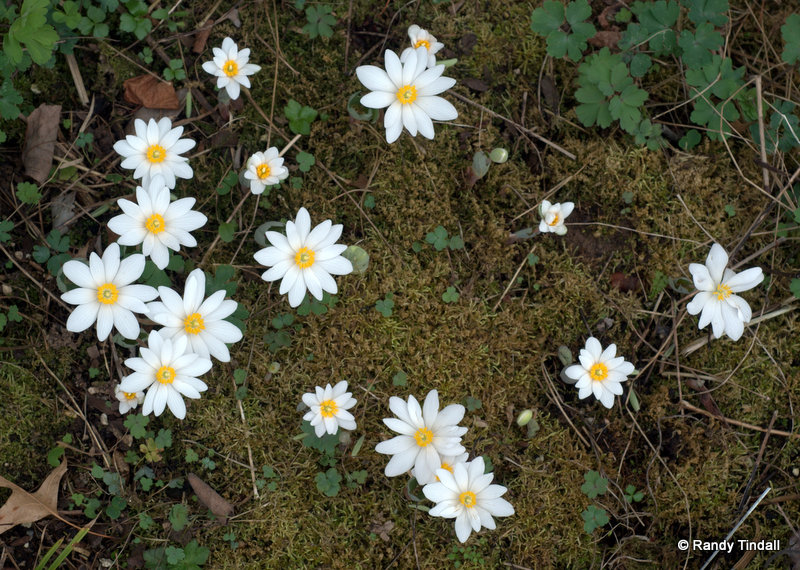
Our Bloodroot Patch
You can also split the rhizomes in early spring or fall and help things along a bit. (If you do your own propagating, please do it from your own plants, not from wild specimens, since for various reasons Bloodroot has challenges out there in the big, harsh world. Let us not make things worse than they are.)
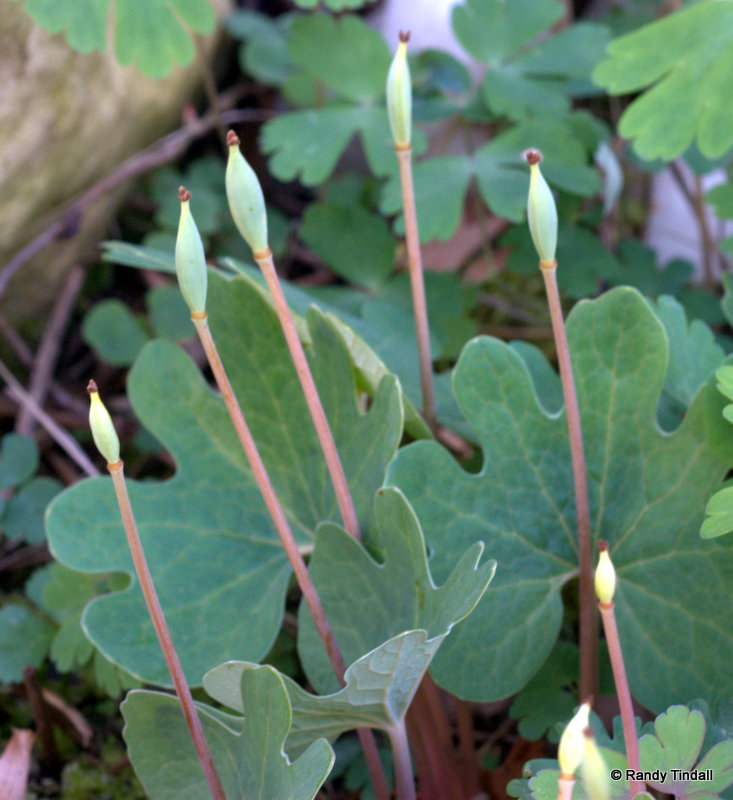
Immature Seed Capsules
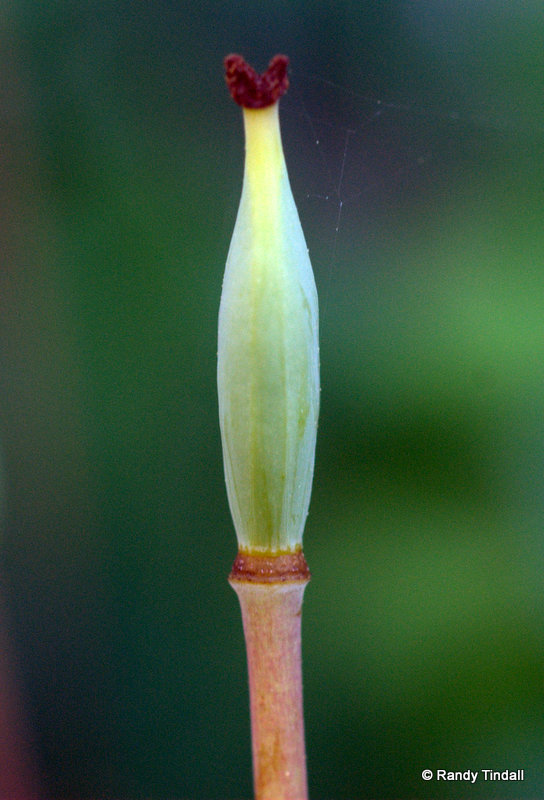
In the wild (as well as in our yard, I suppose), Bloodroot seed is spread by ants, in a process known as myrmecochory. The seeds have attached structures called elaiosomes (the sound of which, for some reason, brings back memories of my Catholic upbringing—some of you will understand) which are edible to ants. Here is a great photo of these seeds—unfortunately, not mine. The ants take the seeds back to their nests, eat the yummy part and toss the remainder away, where it hopefully germinates in an ideal location at a distance from the parent plant. How clever is that?
Bloodroot gets its mystical-sounding name from its sap, which looks like, well, guess. Naturally, this means it gets used as a dye and has been used by Native Americans as body paint, but with care. Like many beautiful things, Bloodroot can bite. It is toxic and has been known to cause visual distortions, such as tunnel vision, in people licking the sap from the roots. (I have seen no explanation yet for why people become Bloodroot-lickers. Maybe they just like tunnel vision? Maybe they are just affectionate with their plants?) It is also an escharotic, and the sap is quite caustic, kills tissue and forms scabs (eschars). This means that if you are doing propagation by splitting the plant, you should wear gloves and/or wash your hands afterwards. It also means, of course, that some have tried to use this property to make medicine, money and mischief.
One of Bloodroot’s more notorious “uses” is as a cancer treatment, a cure firmly condemned by the FDA. (NOTE: This link has disturbing images. Be warned!)
That doesn’t mean, however, that Bloodroot doesn’t have legitimate pharmaceutical uses. I am not qualified to judge its efficacy as a love charm or marriage protector, but it is used, with FDA approval, in toothpastes and mouthwashes to help reduce dental plaque and gingivitis, which might conceivably contribute to romance. This is one of the reasons that Bloodroot often struggles in the wild. As recently as the 1990’s there was a market for this herb of up to 200 TONS per year, making it a target of wild herb gatherers or “wildcrafters”. Consumption appears to be on the increase again, since it is now becoming more popular as a livestock feed additive (good propagation info here, as well), as a substitute for artificial antibiotics.
Now back in the day, I knew some of these wildcrafters and gatherers in the wilds of Southern Illinois, and I seem to recall that one of them told me that it took about 200 dried Bloodroot tubers to make a pound of salable product. Do the math from there to 200 tons and it’s easy to see why Bloodroot in places has gone the way of wild ginseng. Still there, but rare.
Combined with the chance that invasive ant species, such as fire ants, may be driving out species of ants which naturally disperse Bloodroot seeds, and it’s clear that there is cause for deep concern in some parts of the country. So by having this stunning plant in your very own native plant garden, you are helping to maintain and propagate one of our most attractive and lore-laden native species. By collecting and dispersing seeds from your patch back into the wild, you might even help return it to its glory days.
Just try to avoid licking the roots while doing it.
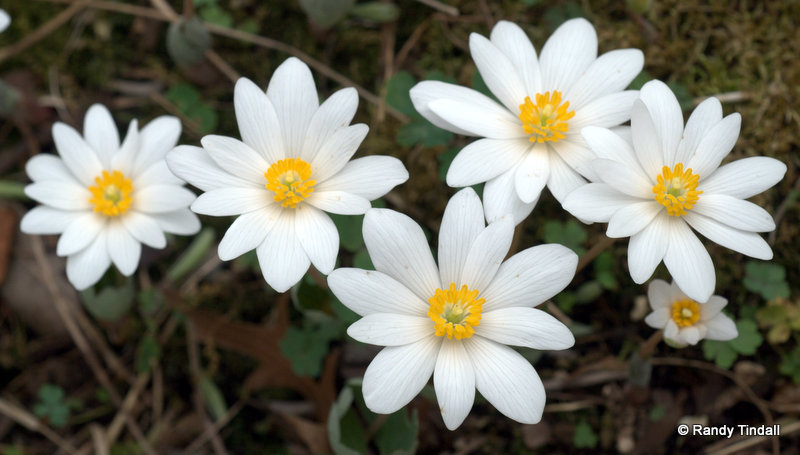
One More Look

I am looking for a site where I might purchase the flower bloodroot. Had this flower from our grandmothers garden, but fear it did not come back this year. Would very much like to get it started again. Can you tell me a source as to where I might find this flower.
Thank You
http://www.mowildflowers.net/
http://www.hamiltonnativeoutpost.com/
http://www.prairiehillfarm.biz/page0006.html
Here are three sources for Missouri, Linelle. I don’t know where you are located, but if you google “native plants” and your town or state, you should find sources, providing it’s actually locally available. It’s a stunning and fascinating spring wildflower, so I wish you good luck! By the way, it likes a lot of shade and well-drained soil. Ours lived on the north side of our house, but when we took down a tree that provided afternoon shade for this particular patch, it took only three years for it to stop coming back.
This is quite a fascinating flower. I’m researching it for a paper. (I’m in 10th grade.) I am astounded by the vast beauty of this plant. Amazing…
It is fascinating, and it is probably my favorite wildflower. News flash though—we had a tree taken down in our front yard because it interfered with the power lines. It apparently allowed so much sunlight to get through in the late afternoon that it was too much for our bloodroot patch. They haven’t been seen for two years. We miss them.
Thanks for reading and for your comment! Good luck with your paper!
If this is the same flower I have planted in my flower bed I found it back in our woods and I live in Ohio
It is certainly possible, since bloodroot is common in Ohio: http://naturepreserves.ohiodnr.gov/wildflower-bloom-report/species-profiles/bloodroot. Hopefully your patch will thrive and grow over the years. This plant likes shade and rich, well-drained soils. Ours was on the north side of our house where we also had some moss growing. We lost the whole patch (20-30 plants) after having a tree removed from our front yard by the power company. The extra light this allowed on that side of the house, especially in late afternoon, seems to have been enough to stop the growth of our bloodroots, so be aware of this sensitivity to too much illumination. We really miss those early blooms each and will try to replant in shadier part of our yard. You should be able to find bloodroots for sale at native plant nurseries in your area.
Thank you for reading and commenting!
Bloodroot is plentiful on my property in Maine. It does indeed grow in the shade, but seems to prefer moist rich soil near the river and creeks.
Glad to hear it, Lyle. We lost our small population when the utility company took down a sweet gum tree in our front yard. It allowed just enough extra light to hit the north side of our house that the bloodroots quit coming up each spring. We’re hoping to establish a new population in the near future.
Thanks for reading and commenting.
Blood root is an entry in our book, “The Midwestern Native Garden – Native Alternatives to Nonnative Flowers and Plants, An Illustrated Guide.” This lovely native flower is an excellent alternative to nonnative species like crocus. lenten rose, and winter aconite.
Today is April 8, 2017 and blood root, the first of my spring flowers to bloom, is again creating its brief but beautiful show. Following a long ago “Plant Rescue,” I obtained a few clumps of blood root, yellow trout lily and bellwort from a house about to be torn down. The numbers of native ephemerals growing there seemed endless. The rescue group worked hard at digging up plants and arranging to get them to a local school for its wild flower garden. We who had gardens took a few home. The blood root I helped rescue thrives in my pesticide-free, humus-rich, partly sunny front yard. And, thanks to ants, new plants appear in unexpected locations. And just as the blood root flowers, migrating warblers begin to arrive, seeking stop over sites so they can rest and dine on tiny insects.
Nice, Charlotte! Thanks for the narrative. We’ll check out your book.
My Bloodroot is popping up all over in our shady backyard. I never knowingly planted Bloodroot, but rhizomes or seeds must have been in a clump of Christmas fern or Wood Phlox, transplanted from our Union County property. The first Bloodroot appeared in 2015. Two small clusters. Last year maybe 12 clusters. This year more and spreading in the utility easement running along the back of yard. In 2003 when we moved into Carbondale at least a third of our one acre yard, and the utility easement, were a tangled mess of invasive species. After hundreds hours of work, invasives are limited to scattered seedling plants and easy to eliminate. And the Bloodroot is being being spread by ants! Today I Googled Bloodroot and Ants and up pops Nadia (and Randy’s) site. We continue to share a love of nature. Love your Web site!
P.S. I would not be surprised if your Bloodroot comes back in a shady part of your yard. Seeds could be lurking
Hi, Laurel! I just found your comment. Thanks for the bloodroot story and all your work to re-establish natives. Our bloodroot has struggled since we took down a sweetgum tree in our front yard, but we did get leaves this year, at least. No blossoms, though. Best to you and Bik and we hope to see you someday in the not-too-distant future.
When is the best time to lift/divide up the rhizome for propagating or spreading to a new location?